
Protecting High-Traffic Surfaces Under Heavy Use
Industrial coatings in St. George for warehouse floors and aircraft hangar surfaces exposed to constant equipment movement and chemical stress
Creative Coating Solutions applies industrial coatings to warehouse floors, aircraft hangars, and other commercial facilities in St. George where surface durability directly affects daily operations. You need a floor system that withstands forklift traffic, heavy pallet loads, chemical spills, and temperature fluctuations without cracking, peeling, or requiring frequent repairs. Industrial coatings create a hardened, seamless surface that resists impact and abrasion while remaining safe for workers moving across the space throughout the day.
The coatings used in these environments differ significantly from residential epoxy or standard concrete sealers. They are formulated to handle the weight of machinery, repeated tire friction from equipment, and exposure to oils, solvents, and cleaning agents common in industrial settings. In facilities like airport hangars, the floor must also resist jet fuel, hydraulic fluid, and the intense wear caused by aircraft tugs and ground support equipment. These coatings bond directly to prepared concrete, filling surface imperfections and creating a monolithic layer that distributes stress evenly across the substrate.
If your facility is experiencing surface wear or you are preparing a new space for operation, Creative Coating Solutions can assess your floor and recommend a coating system that matches the demands of your environment.
What Happens During an Industrial Coating Installation
Before any coating is applied, the concrete surface is mechanically prepared using diamond grinders or shot blasters to remove contaminants, open the pores of the concrete, and create a profile that allows the coating to bond properly. You will see the crew working in sections, ensuring that dust and debris are contained and that the substrate is clean and dry before the first layer goes down. Surface preparation accounts for much of the installation time and directly determines how well the coating adheres over the long term.
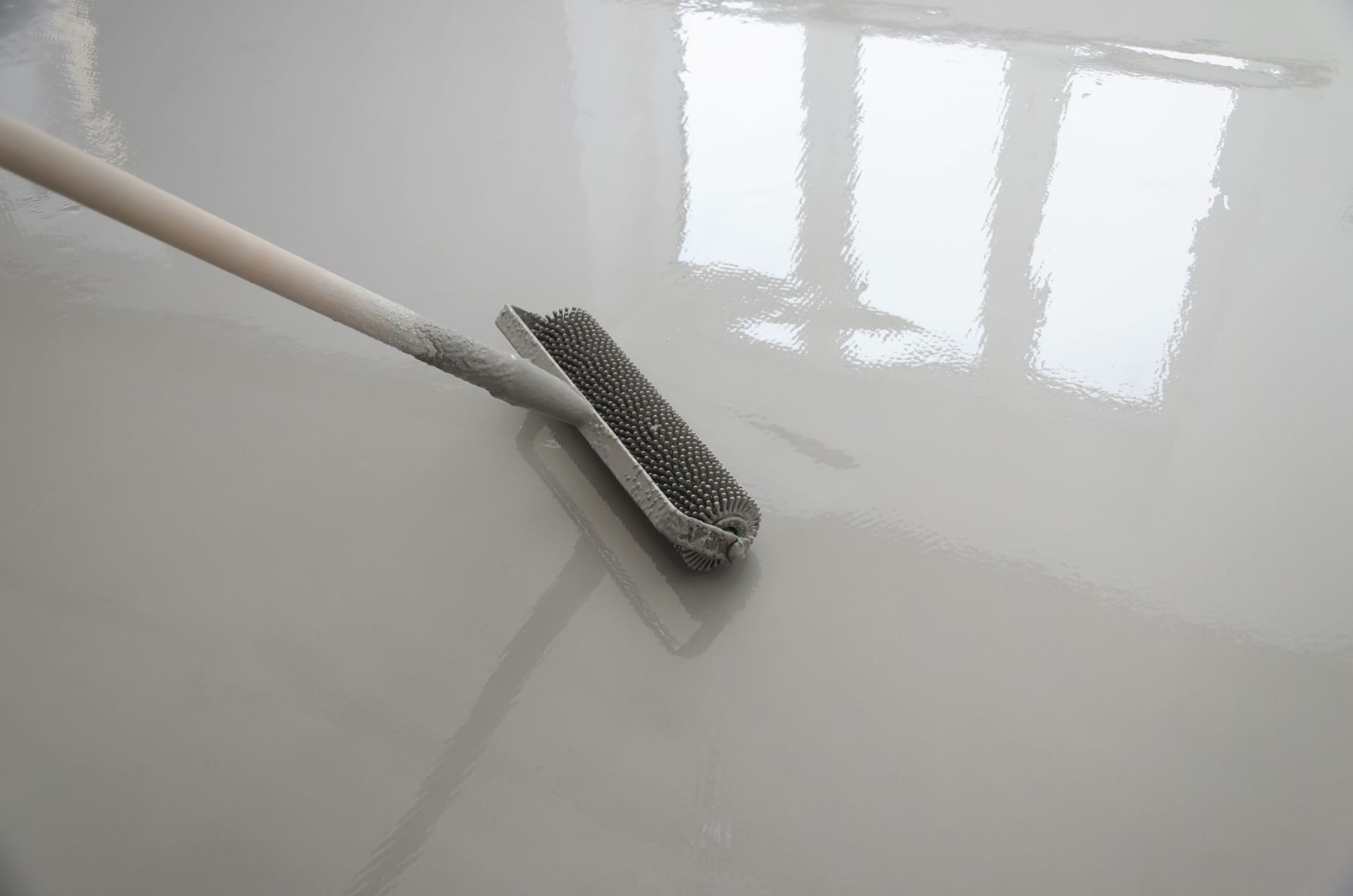
Once the floor is prepped, the base coat is applied, followed by additional layers depending on the system specified. After the coating cures, you will notice a uniform, slip-resistant surface that no longer shows the staining, pitting, or dusting common in untreated concrete. The floor becomes easier to clean, reflects overhead lighting more effectively, and resists the buildup of oils and particulates that would otherwise penetrate bare concrete. Creative Coating Solutions completes installations in phases when necessary to keep portions of your facility operational during the project.
The coating system is selected based on the type of traffic, the presence of moisture or chemicals, and the expected lifespan before recoating. Some installations include a topcoat with enhanced UV resistance for hangars with large door openings, while others prioritize chemical resistance for manufacturing or storage areas. The work does not include structural concrete repair, but surface cracks and joints are addressed as part of the prep process to prevent telegraphing through the coating.
Common Questions About Industrial Coating Projects
Facility managers and property owners often ask about downtime, curing schedules, and how the coating will perform under specific conditions.
How long does the floor need to cure before equipment can return?
Most systems allow light foot traffic within 24 hours, but full vehicle traffic typically requires 72 hours or more depending on the product and ambient temperature during installation.
What types of facilities benefit most from industrial coatings?
Warehouses with forklift traffic, aircraft hangars, manufacturing plants, distribution centers, and any space where heavy equipment moves across concrete regularly will see measurable improvements in floor durability and maintenance costs.
Why is surface preparation so critical in these projects?
The coating can only bond as well as the surface allows, so any oil, dust, or weak concrete left in place will cause delamination or bubbling once the floor is back in service.
Can coatings be applied in St. George during temperature extremes?
Application windows depend on the product, but most industrial coatings require substrate temperatures between 50 and 90 degrees, which can limit scheduling during peak summer heat or winter cold snaps.
How do you handle joints and control cracks in the slab?
Joints are cleaned, filled, or left as control points depending on the movement expected in the slab, and cracks are routed and filled to create a stable base before coating begins.
If your facility floor is showing wear or you are planning a new build that requires a durable surface from the start, Creative Coating Solutions can walk the space with you and outline a coating system that fits your operational needs and timeline.