
Surface Protection That Prevents Cracking and Staining
Concrete Coatings in St. George for slabs showing surface deterioration, cracking, or persistent discoloration
Creative Coating Solutions installs concrete coating systems that protect and refinish interior floors in residential garages, workshops, retail spaces, and commercial buildings throughout St. George. You may be dealing with a slab that shows hairline cracks spreading outward from control joints, oil stains that have soaked below the surface, or a dusty texture that reappears daily despite regular cleaning. Concrete coatings seal the surface, stabilize minor cracks, and create a finish that resists further staining and wear.
The installation process includes mechanical grinding to remove old sealers and smooth surface irregularities, crack routing and filling to prevent movement, and application of a multi-layer coating system designed for durability under heavy use. The coating bonds directly to the prepared concrete, forming a continuous barrier against moisture, chemicals, and abrasion. Southern Utah properties face extreme temperature swings and high levels of airborne dust, so the system is formulated to remain stable in both summer heat and winter cold without cracking or peeling.
If your floor is cracked, stained, or difficult to maintain, a site evaluation can clarify what prep work is required and which coating system fits your space.
What the Floor Looks and Feels Like After the Work Is Complete
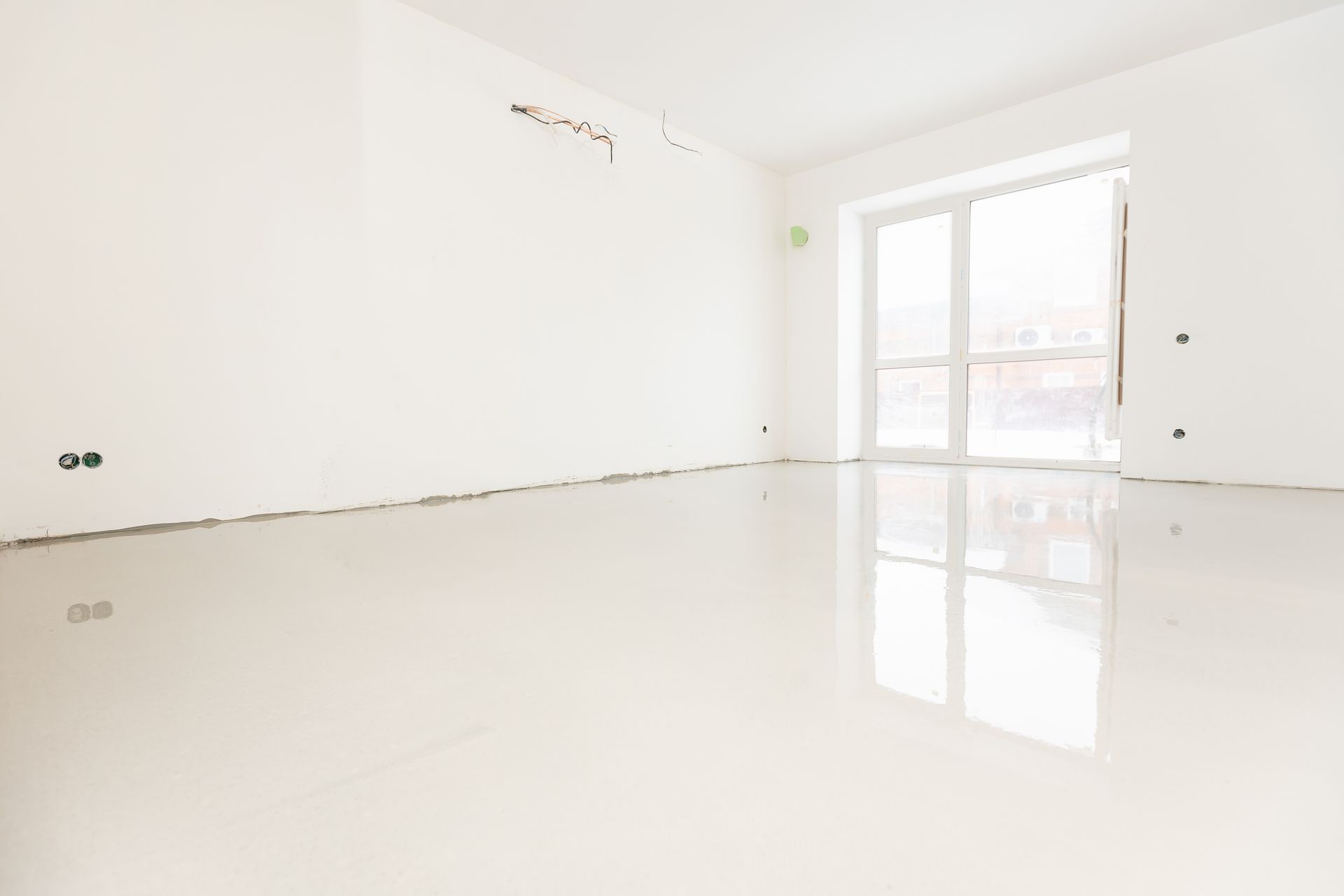
Cracks that were visible before the coating are filled and sealed, so they no longer collect dirt or spread wider. The surface becomes non-porous, which means spills sit on top long enough to be wiped away without leaving a shadow. The floor reflects light, which brightens the space without adding fixtures. Dust and debris collect in loose piles rather than bonding to the concrete texture, so sweeping and mopping take less time and leave the floor cleaner.
Creative Coating Solutions applies the coating in stages, allowing each layer to cure before the next is added. Most floors are ready for light foot traffic within 24 hours and full use within 72 hours, depending on ambient temperature and humidity. The coating remains stable through seasonal temperature shifts and does not yellow, crack, or peel when exposed to sunlight or high heat.
The system is designed for surface protection, not structural repair. It will stabilize minor cracks and prevent new ones from forming, but it cannot fix deep spalls, active heaving, or moisture issues originating below the slab. Substrates with ongoing movement or vapor transmission may require additional concrete work before the coating can be applied. Proper surface preparation is included in every project and is essential for long-term adhesion.
Details About the Coating Process and What It Can Handle
Homeowners and business operators in St. George often ask about crack repair, cure times, and how the coating holds up under daily use. The answers depend on the condition of the existing slab and how the space is used once the system has cured.
What happens to cracks during the prep phase?
Small cracks are routed out using a diamond blade, cleaned, and filled with epoxy paste that bonds to both sides of the crack. This prevents dirt infiltration and stops the crack from widening. Large or active cracks may require structural evaluation before coating.
How long does it take for the coating to fully harden?
Light foot traffic is safe after 24 hours, but heavy equipment, furniture, and vehicles should stay off the floor for at least 72 hours. Rushing this step can leave marks or cause the coating to lift at the edges.
Why does the floor sometimes feel slightly rough right after installation?
The texture depends on the aggregate size and the final topcoat. Some systems include a slip-resistant additive that creates a slightly textured finish, while others cure to a smooth, glossy surface. The texture will not change once the coating has fully hardened.
When should you avoid scheduling this work in St. George?
Temperatures above 95 degrees can cause the coating to cure too quickly, leading to bubbles or poor leveling. Late fall through early spring offers the most stable conditions, though summer installations are possible with early morning start times and climate control.
What types of wear can a cured concrete coating resist?
The coating handles foot traffic, rolling carts, dropped tools, and most household and automotive chemicals without staining or scratching. Sharp metal edges dragged across the surface and prolonged exposure to strong acids can damage the finish.
Creative Coating Solutions provides free estimates that include a walkthrough of your property, an inspection of any existing damage, and a written scope detailing surface prep, layer count, and cure times. If you need a floor that resists cracking and staining while requiring less maintenance than bare concrete, scheduling a site visit will clarify what the coating system can do and how long the installation will take.